Gucci Authentication Guide and Serial Numbers
If you are looking for a Gucci bag for your shop, it is essential that you know how to tell the difference between a genuine bag and a counterfeit. Even better, you should buy from a trusted reseller that has your back. If you still plan to handle the transaction yourself, there are certain signs you need to watch for. Here is a brief overview to help you get started.
Brief history of Gucci
When Guccio Gucci, the founder of the Gucci brand, left Paris for London in 1897 to work as a groom at the Savoy Hotel, he gained first-hand experience of the tastes of the wealthy when it came to fashion, fabrics, quality luggage, and travel conditions. Then, when he worked for a European railway company specializing in high-end travel, he learned even more about luggage and the luxurious lifestyle of the rich and famous.
After the First World War, Gucci worked for Franzi, a quality luggage maker, and it was there that he refined his skills in this field. Armed with everything he had learned about travel, luggage, fabrics, and leather goods, Gucci bought his first boutique in Florence, Italy, in 1921 and created a leather goods and luggage store. He also opened a small workshop so he could hire a local craftsman to make his leather goods, but as his staff grew, the workshop became too small and he bought a larger one. Gucci made a name for himself among local aristocrats who practiced horseback riding, and their demand for leather riding clothes prompted Guccio to incorporate equestrian imagery, such as the bit, into his creations.
At the start of the Second World War, sanctions were put in place to limit the materials used for goods. Gucci therefore improvised and began designing handbags and luggage in raffia, wood, cotton canvas, jute, and hemp, which are still used today. At that time, Gucci also developed a new leather tanning technique called “cuoio grasso” and created the GG Rombi pattern, which became and remains his trademark.
In 1937, Gucci launched handbags and in 1938, Aldo, Guccio's son, convinced his father to open a boutique in Rome where they created and sold other accessories such as gloves, belts, wallets, and key rings. Gucci bags, made from cotton canvas, stood out for the GG symbol and the signature red and green stripe. After the war, the Gucci crest became synonymous with the city of Florence.
Quality is remembered long after the price is forgotten.
In 1947, the Gucci bamboo bag was created, followed by the iconic Gucci loafers. Unfortunately, as the Gucci empire continued to grow and open boutiques in the United States and Milan, Guccio Gucci died in 1953.
Gucci bags
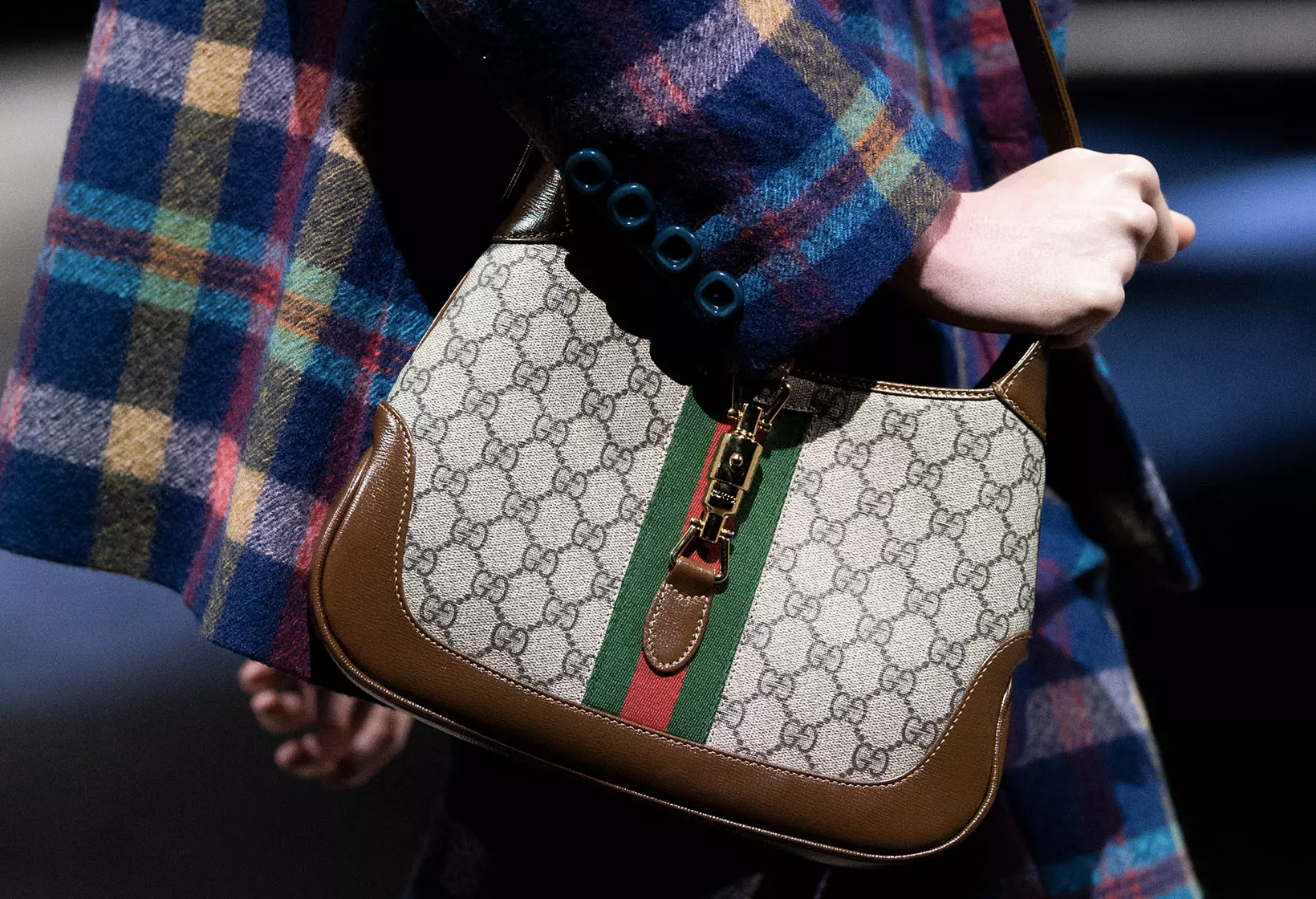
Since the end of the 19th century, Gucci has produced some of the world's most exquisite and oldest trunks and handbags. And while trends come and go, many Gucci handbags have stood the test of time and retain the best resale value. But what if you are not sure whether the bag you are about to buy is the real deal? We are here to help.
Logo
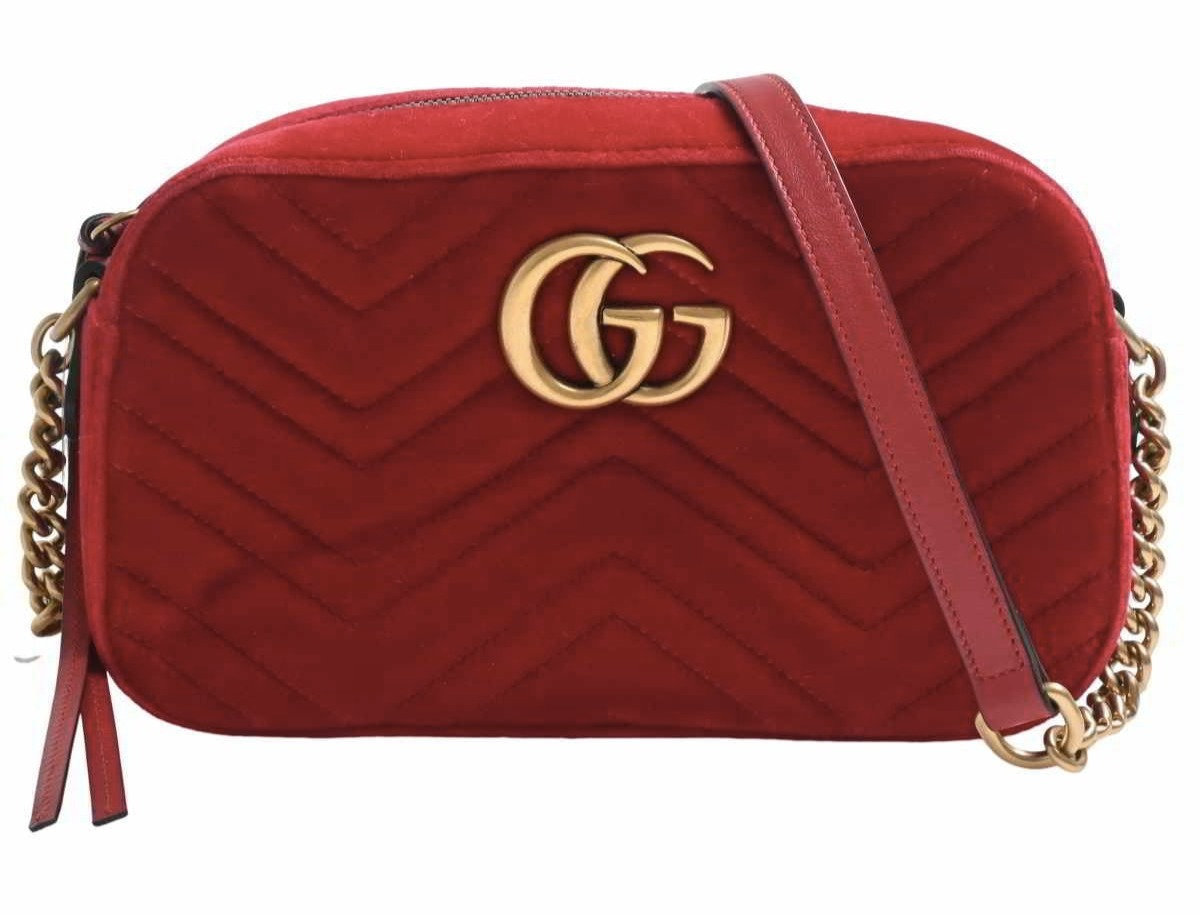
One of the first and most obvious ways to judge whether your bag is the real deal is to check the GG logo. The two capital Gs should be thin at the top, thicker in the middle and, of course, overlapping. If the logo is too thin or too glossy, you have probably found a fake. With the signature monogram, the logo and design should be consistent throughout the bag. If you notice Gs of different sizes or lower-case Gs, the bag is probably fake.
Stitching
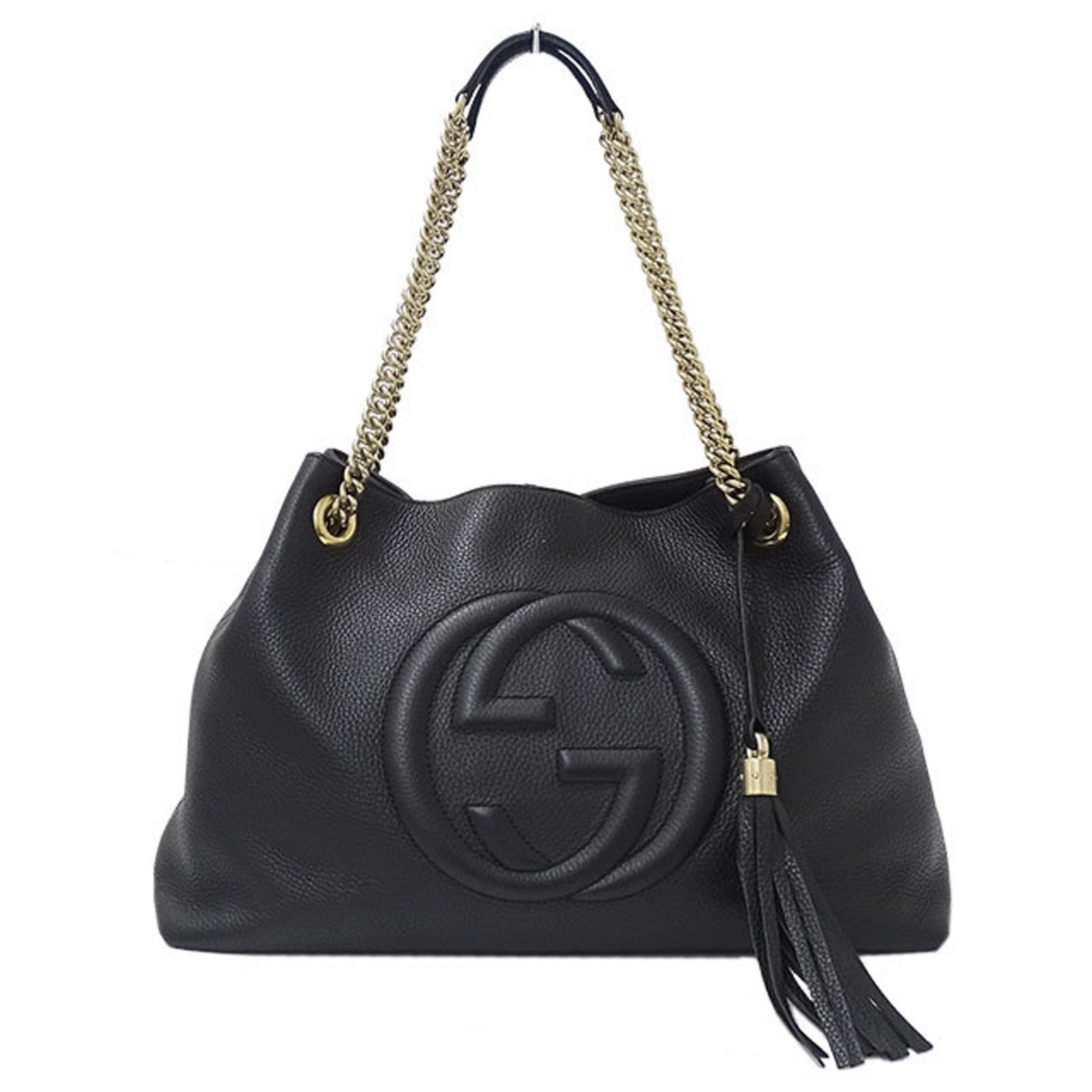
Another telltale sign is the stitching. If it is crooked, uneven, or irregular, you may have a fake Gucci bag on your hands. The stitching on a genuine Gucci handbag is consistent and regular, with no loose threads. The stitching on quilted patterns (such as chevrons) is spaced in a particular way and should be the same throughout.
The GG logo stitching found on bags like the Soho is extremely difficult to reproduce, even for the best, and should also be closely examined.
Leather
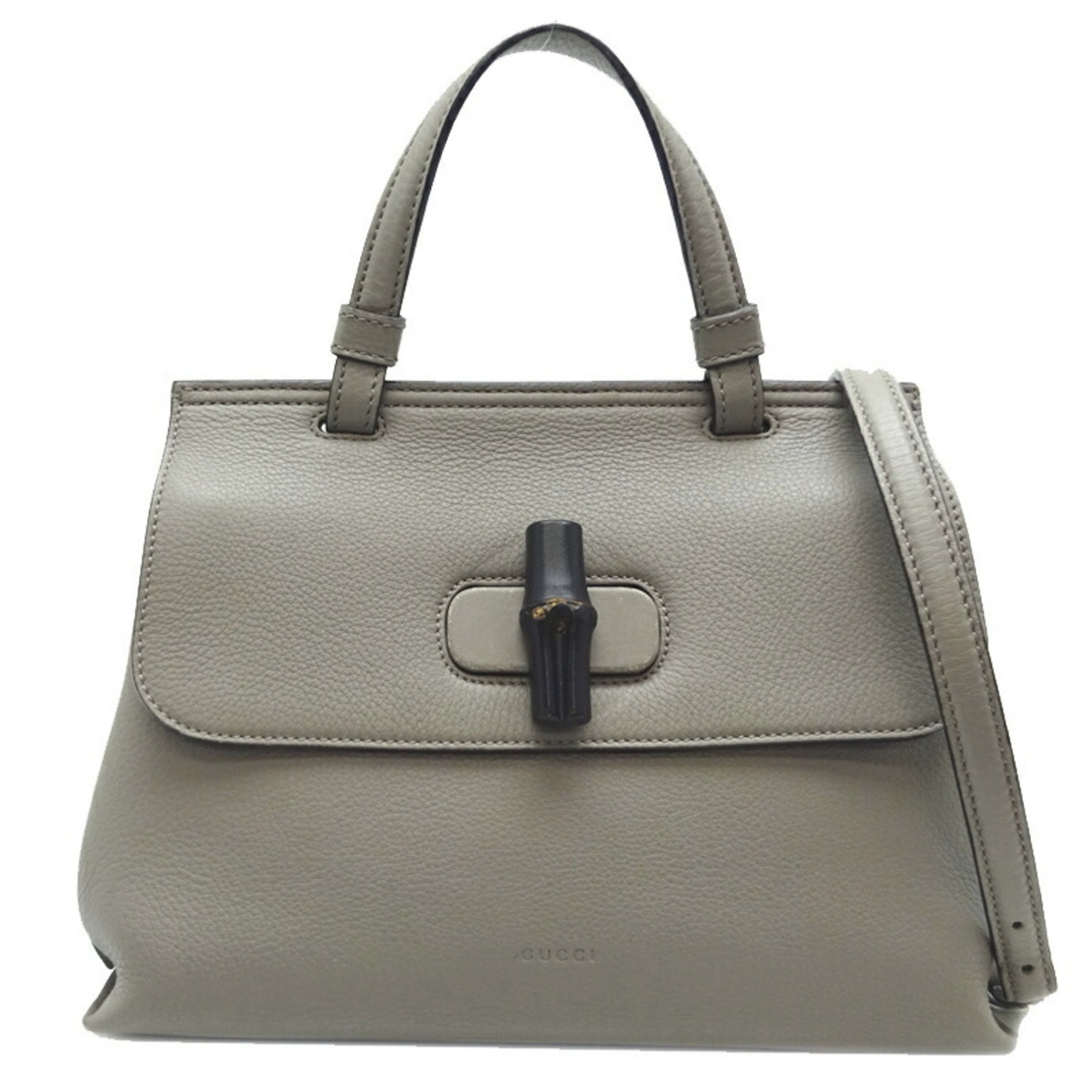
Gucci has created some of the world’s most popular and instantly recognizable designer items thanks to its leathers, fabrics, and logos. And while the shape and design of a Gucci item say a lot, the use of exotic skins, bright colors, exclusive fabrics, and of course the iconic GG pattern leaves fans speechless, which is why the quality of the leathers and materials is so important.
Whether you are shopping for your clients or for yourself, remember that genuine leather eventually stretches and loses its shape. That also means it will develop a patina and show an uneven finish. The bag should feel soft to the touch and have a natural musk and leather smell. If the bag feels like plastic, is too stiff or too light, and gives off a chemical smell, you should question its authenticity.
Lining
The interior lining of an authentic Gucci bag is also high quality, often in microfiber or fine leather. Its color should be bright and even, with no wrinkling or peeling anywhere. A dull lining, poorly attached or visibly lower in quality than the rest of the bag is a classic counterfeit indicator.
Hardware
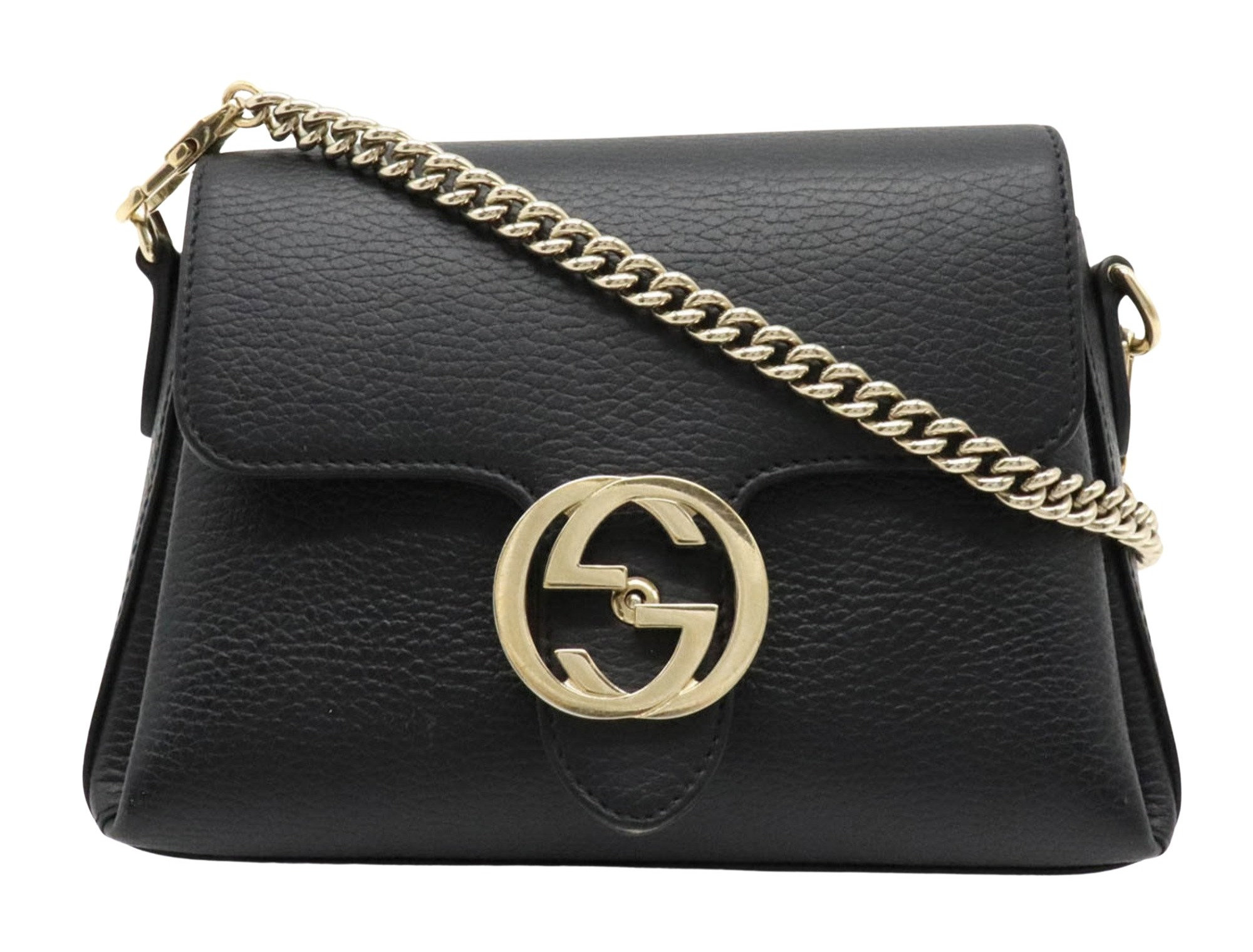
All the hardware on an authentic Gucci bag is made from the highest-quality materials, and therefore should be solid and heavy. The hardware should be placed evenly and stamped with Gucci logos and typefaces. Look out for rusted or chipped parts, as well as incorrect spacing and fonts. The zipper should also be straight and open and close with ease.
Gucci cards and serial numbers
Nothing will damage your store's credibility faster than accepting and selling fake designer items. Knowledge is power, and remember that if something seems too good to be true, it probably is a fake.
Control cards
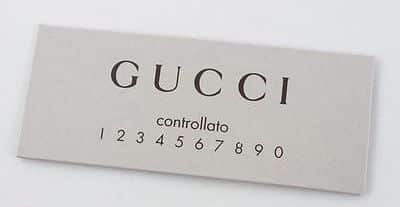
A truly authentic Gucci bag comes with a business card, or “control card,” which is added to each new item to show that its quality has been checked. The absence of one of these cards may indicate that it is a counterfeit, but do not think that the presence of a card means it is a genuine bag. If the counterfeiter can make a fake bag, they can certainly make a fake paper card.
If the Gucci logo is centered, the word “controllato” is in lowercase, and the numbers “1234567890” are at the bottom, the card may be legitimate. If the card is not even there or does not have the aforementioned qualities, walk away as if it were hot.
Gucci tag
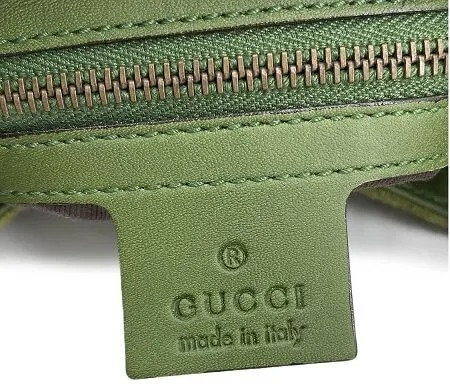
Inside the bag, you will find a leather label bearing the words “Gucci”, “made in Italy” and the trademark symbol. Pay attention to the font, spacing, spelling, and placement. If you are unsure, do a quick online search.
The serial number is another telltale sign of a fake versus a genuine item. Located inside the bag and on the back of the leather Gucci tag, the serial number is hot-stamped into the leather and consists of two rows of 10 to 13 digits.
The top number is the style number, and the bottom one is the supplier code. This means you can search the number to make sure it matches the item you bought. If you bought a shoulder bag and the number brings up a belt, you have a problem! And obviously, if the stamp is crooked, messy, or hard to read, be wary.
A technical detail to know: these numbers always consist of digits only, never letters, in a serif font close to Times New Roman. A number containing letters or shown in a sans serif font is an immediate red flag.
As with other luxury houses, keep in mind that this code does not identify a unique bag: it corresponds to a series and a manufacturer, and simply needs to remain consistent with the exact model of the bag you are examining.
The evolution of the tag and serial number over time, as a guide:
Period | Tag and serial number |
|---|---|
Very old bags | No serial number, or only a two-digit number |
1990s | Slightly rounded tag at the bottom, “MADE IN ITALY” in all caps, without the trademark symbol |
More recent | Square or slightly rectangular tag, serial number in two lines of 10 to 13 digits |
From 2016-2017 | QR code added to a fabric tag sewn into the lining, in addition to the leather tag |
The QR code
Since 2016-2017, most recent Gucci bags have featured, in addition to the serial number stamped on the leather tag, a QR code printed on a small fabric tag folded in half and sewn into the lining, usually near a zipper. This code can be scanned via the official Gucci app to verify the item's origin. It is an additional verification tool, still difficult for counterfeiters to reproduce correctly, but its absence alone is not enough to disqualify an older bag that simply was not equipped with one at the time of manufacture.
Before buying: the right reflexes
An abnormally low price is never, on its own, proof of a good deal — it is often the first warning sign.
A good seller rating or good reviews do not guarantee the authenticity of the item sold.
The presence of a control card is reassuring but does not prove anything on its own, as mentioned above.
Always compare the bag with the official Gucci photos of the exact model and season before relying on your own impression.
GUCCI with TBC Wholesale
Discover TBC Wholesale, the most reliable and most important online platform for finding authentic and pre-owned luxury products. With TBC Wholesale at your service, you have immediate access to all the best-selling designer pieces for your resale business.
You will never again have to spend countless hours searching for the trendiest Louis Vuitton clutch or the classic Chanel bag at a good margin. You will no longer have to worry about currency conversions, customs and shipping procedures, or the authenticity of your purchases. Every item on TBC Wholesale is inspected and authenticated multiple times.
On our wholesale platform, each item comes with a description, its condition, and a grading letter for major brands. Each item is checked and inspected by TBC so that you and your customers can be reassured about the authenticity of every purchase.
If you are a business, you can benefit from exclusive access to authentic, pre-owned branded bags, jewelry, and accessories at wholesale prices. To learn more, click here.