Fendi Authentication Guide and Serial Numbers
From clothing to shoes, handbags to accessories, Fendi has created some of the most iconic pieces in the fashion industry since its founding in 1925. Today, Fendi remains one of the world’s biggest luxury brands, with one of the most immediately recognizable logos, the "Zucca" logo. But with popular luxury brands come counterfeiters, and their ability to skillfully copy some of Fendi’s best-selling items is greater than ever. That is why it is so important that you know the warning signs to watch for before buying a pre-owned Fendi bag for your business.
Fendi History
The Fendi house was founded in Rome, Italy, in 1925. Created by Edoardo and Adele Fendi, the company was the first handbag and fur workshop on Via del Plebiscito in Rome, but it became famous for its impeccable designs and high-quality products. Fendi became a go-to destination for high-end leather and fur goods on the Italian peninsula, and demand soared.
Two decades after Fendi opened, Adele and Edoardo passed their Roman luxury empire on to their five daughters — Paola, Franca, Carla, Anna and Alda. The girls seized the opportunity to modernize the Fendi brand and make it cool, and so they welcomed Karl Lagerfeld with open arms. In 1965, Karl was already a pioneer in fashion, having designed for brands such as Balmain and Chloé. At their first meeting, Karl took a sheet of paper and drew the brand’s now iconic double F logo, which stands for Fun Furs. Once the double F — or Zucca logo — was applied to the merchandise, the company instantly became a light and dynamic luxury brand.
“I drew the double F in three seconds, and it became the acronym for the Fendi house.” — Karl Lagerfeld
Karl Lagerfeld reimagined fur — which had previously been used for large and heavy coats — and incorporated it into ready-to-wear and leather goods collections, thereby increasing Fendi’s fur sales and demand and making it more accessible.
Lagerfeld worked closely with the Fendi daughters to evolve and innovate the brand by offering many more colors and creating more unique and creative pieces. In fact, Lagerfeld was also the creative mind behind the launch of Fendi’s ready-to-wear collection in 1977 and launched a shoe line in 1978.
Fendi Authentication
From clothing to shoes, handbags and accessories, Fendi has created some of the most iconic pieces in the fashion industry since its founding in 1925. Today, Fendi is still one of the world’s biggest luxury brands, with one of the most immediately recognizable logos, the Zucca, but popular luxury brands come with counterfeits, and their ability to expertly copy some of Fendi’s best-selling items is better than ever. That is why it is so important that you know the warning signs to watch for before buying a pre-owned Fendi bag for your business.
The iconic models to know
Before even examining a bag in detail, it is helpful to know which model you are dealing with, as some checkpoints are specific to each line:
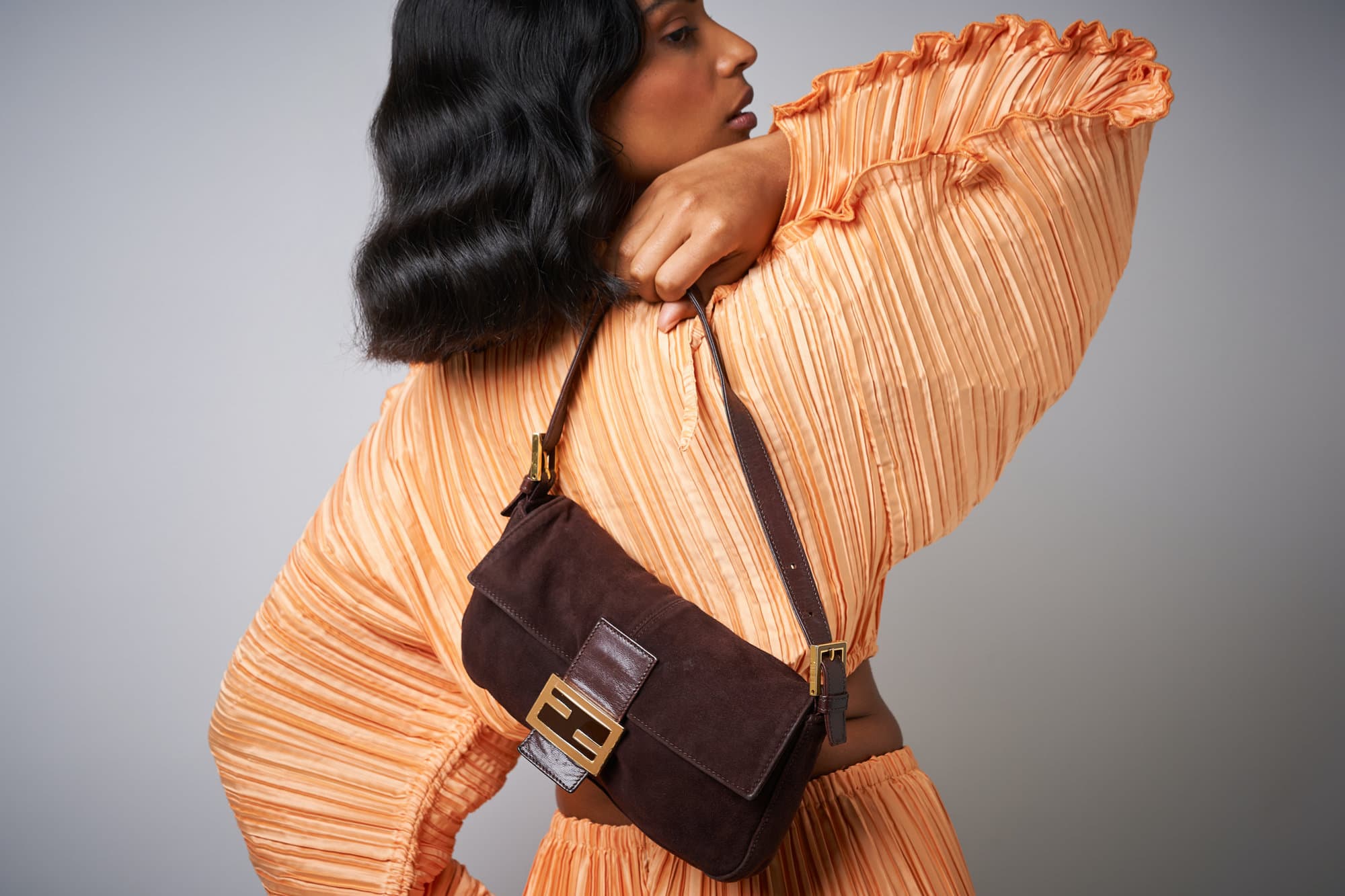
Baguette: the most copied model from the house, recognizable by its elongated shape worn under the arm.
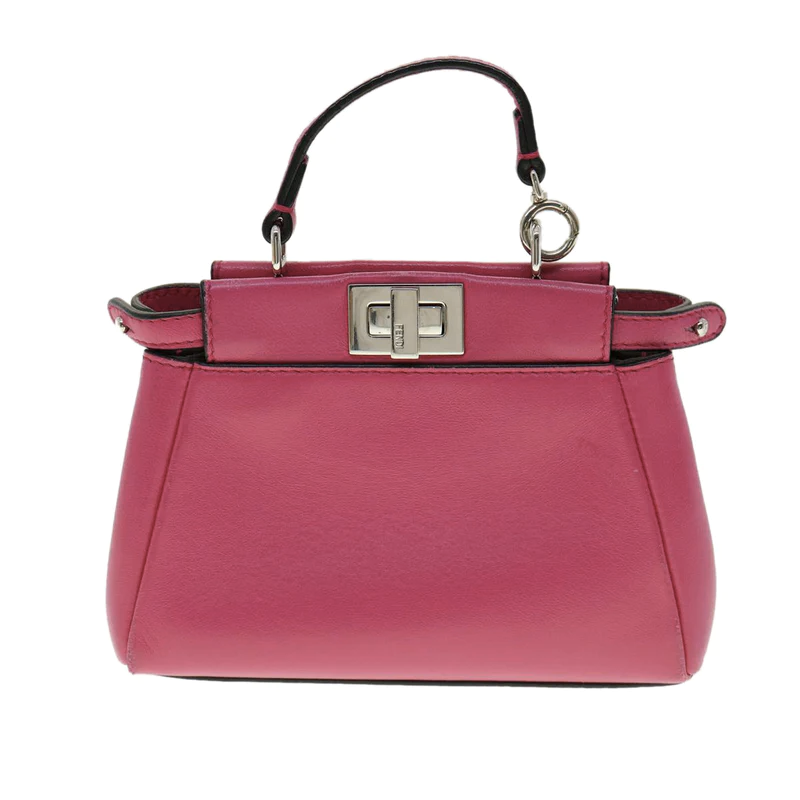
Peekaboo: more rigid structure, central clasp and double compartment.
Zucchino: the historic bag in FF monogram canvas.
Always compare the bag with official photos of the exact model and season: the shape, proportions and placement of the logos vary from line to line, and a counterfeit rarely reproduces these details perfectly across the range.
Zucca Logo
The metal Fs on the front of a Fendi bag should be offset on either side of the rectangular plaque, not directly opposite each other. With the monogram print in Zucca and Zucchino models, the FF should be the same size throughout the bag, evenly spaced, and the second stroke of the F should be shorter and thinner than the one before it.
Hardware
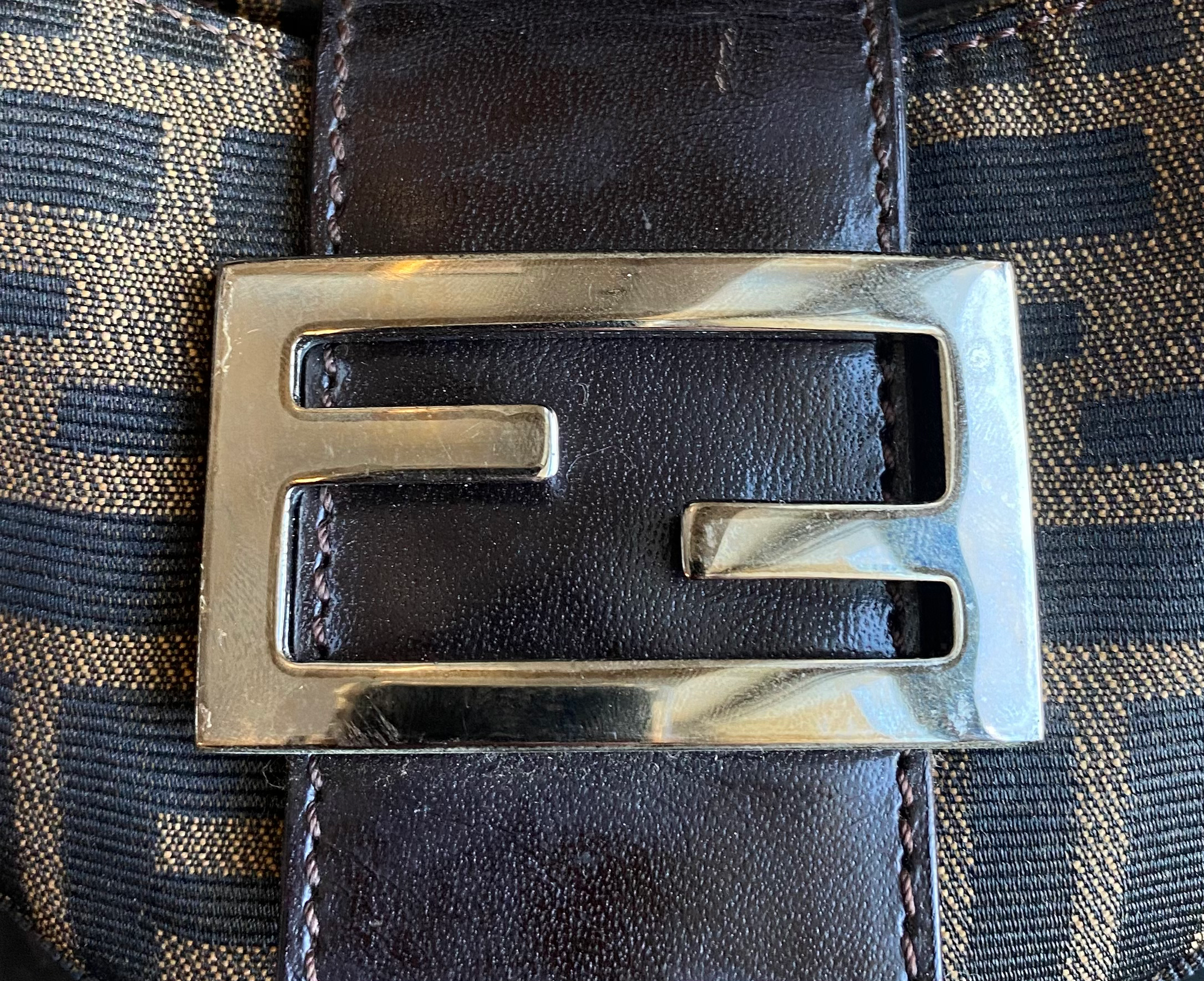
The clasps on authentic Fendi bags are made of nickel, brass or plated nickel, smooth and shiny. The Fs should be vertically and horizontally reversed, but not parallel to each other. The plaque should be the same color as the rest of the bag’s hardware.
Keep in mind that Fendi likes to engrave most of its accessories with FENDI or FF, so look for engraving on places such as zippers and fastenings. Pay attention to YKK zippers on a Fendi bag as they can be a telltale sign of a fake. The zippers should feature the Fendi logo on both sides, the exterior zippers should be YKK metal, they should open and close smoothly, and the same standards apply to the bag’s fastenings. Counterfeits may try to fool you with poorly designed stamps or engravings on the exterior hardware.
One last checkpoint, simple but very effective: the screws. The Fendi house uses flathead screws exclusively, never Phillips screws. The presence of cross-head screws on a bag’s hardware is an almost certain red flag.
Leathers and Materials
Fendi bags are always made from the finest leathers, which means the bag should stand upright on its own, feel soft to the touch and smell like genuine, clean leather, not chemicals. Genuine leather has a distinct smell that is hard to imitate, unlike synthetic materials that often give off a strong plastic or glue smell; it should neither stick nor flake, even on a pre-owned bag.
For other bags, such as those made in Fendi’s signature jacquard canvas, the weave of the materials should be perfect, not loose or pixelated, and the lining should be plain canvas with no FF pattern.
LININGS
The lining deserves just as much attention as the outside of the bag. On an authentic bag, it should be clean, well attached, free of stray folds, and feature clear lettering when the model includes it. A lower-quality lining that is poorly fitted, loose or covered in an FF print pattern anywhere is a classic counterfeit indicator.
Stitching
Stitching is one of the most reliable checkpoints. On an authentic Fendi bag, it should be even, tight, the same color as the leather, with no loose threads or irregular stitching. Counterfeits, even sophisticated ones, almost always have less careful stitching: uneven tension, “swallowed” stitches or visible threads are unmistakable signs to a trained eye.
Serial Numbers
All Fendi bags made after the 1980s have a serial number. It is either embossed on the back of a leather tag, or on a narrow leather tag sewn into the seam of one of the corners or pockets. The inside label should read “FENDI Made in Italy.” This serial code consists of an alphanumeric serial number, separated by hyphens and made up of 15 to 17 digits that match the number on the bag’s authenticity card.
The format of this number (number of digits, presence of hyphens, type of support) has evolved over time. It is therefore useful to know Fendi’s main identification periods to verify that a number corresponds to the apparent age of the bag:
Period | Identification system |
|---|---|
Before the 1980s | No systematic serial number |
1980s – 2004 | Alphanumeric serial number (15 to 17 characters) on tag or sewn plaque |
From 2004 onward | Addition of a holographic foil sticker, attached to the fabric label, in addition to the serial number |
From the early 2010s onward | Replacement of the hologram with an RFID chip sewn into the fabric label |
A serial number that is inconsistent with this timeline — for example, a hologram on a bag supposedly dating from before 2004 — is a warning sign to take seriously.
Radio Frequency Identification
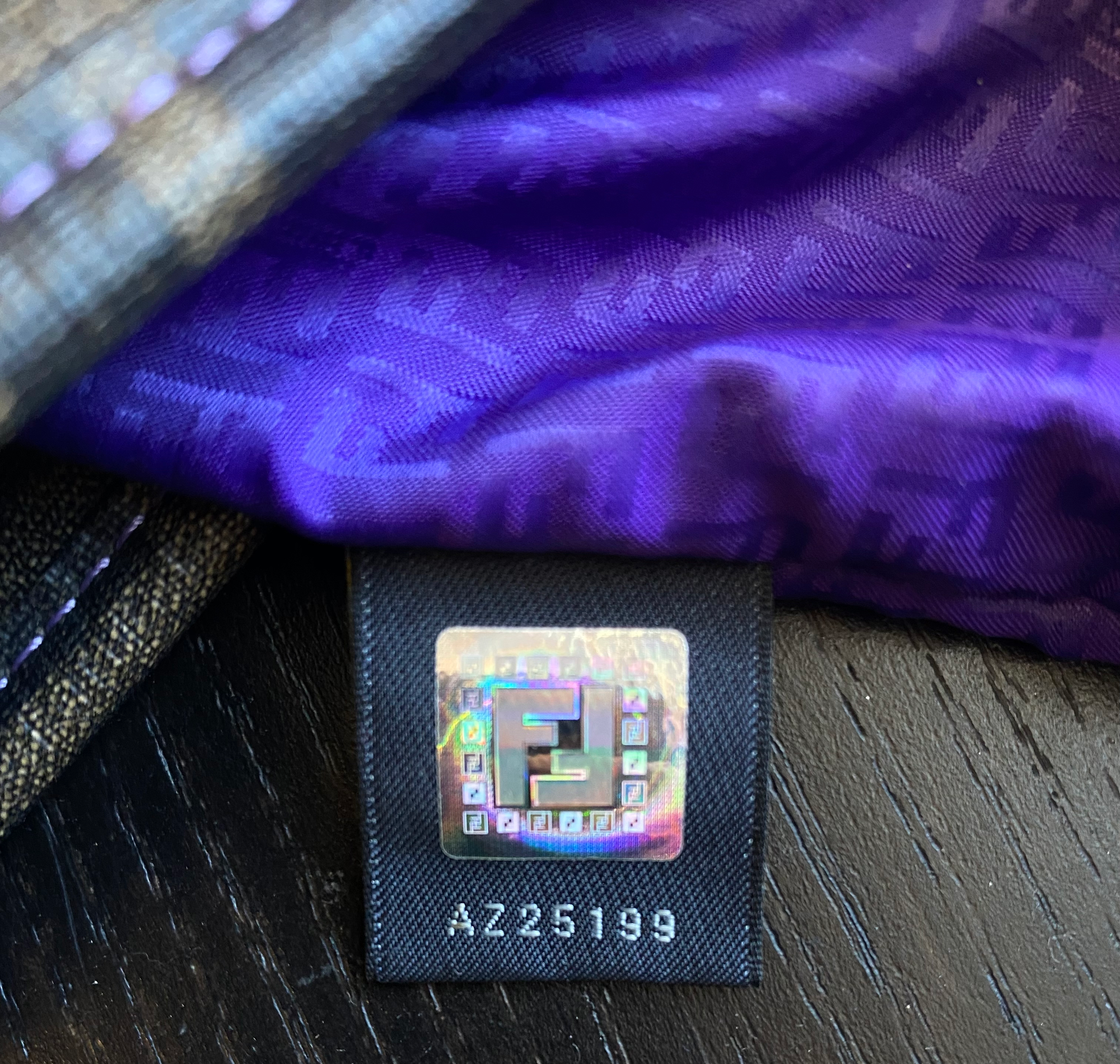
Since the early 2010s, Fendi has replaced the hologram with RFID. The RFID chip is scannable and is located on the fabric label inside the bag. It is sewn with 8 digits containing information about the bag’s production and origins. RFID tags can only be read using a special device that can be found in-store.
New, authentic Fendi bags come with paper cards that contain the same serial number hidden inside the bag. This paper also includes the model, color and barcode.
Keep in mind, however, that the card, box and dust bag are reassuring but do not prove anything on their own: these accessories are easy to imitate. What matters is consistency between the material, the finishes, the serial number and, if the bag is equipped with one, the RFID reading.
Before buying: the reflexes to have
As with any purchase of a pre-owned luxury piece, a few simple reflexes can help you avoid the biggest scams even before examining the bag in detail:
An abnormally low price is never, on its own, proof of a good deal — on the contrary, it is often the first warning sign.
A good seller rating or good reviews do not guarantee the authenticity of the item sold.
Always compare the bag with official Fendi photos of the exact model and season before relying on your own impression alone.
Fendi with TBC Wholesale
Discover TBC Wholesale, the most reliable and leading online platform for finding authentic pre-owned luxury products. With TBC Wholesale at your service, you have immediate access to all the best-selling designer pieces for your resale business.
You will never again have to spend countless hours searching for the trendiest Louis Vuitton clutch or the classic Chanel bag at a good margin. You will no longer have to worry about currency conversions, customs and shipping procedures, or the authenticity of your purchases. Every item on TBC Wholesale is inspected and authenticated multiple times.
On our wholesale platform, every item comes with a description, its condition and a grading letter for the major brands. Every item is checked and inspected by TBC so that you and your customers can be reassured of the authenticity of every purchase.
If you are a business, you can benefit from exclusive access to authentic, pre-owned branded bags, jewelry and accessories at wholesale prices. To learn more, click here.