
Dior Authentication Guide
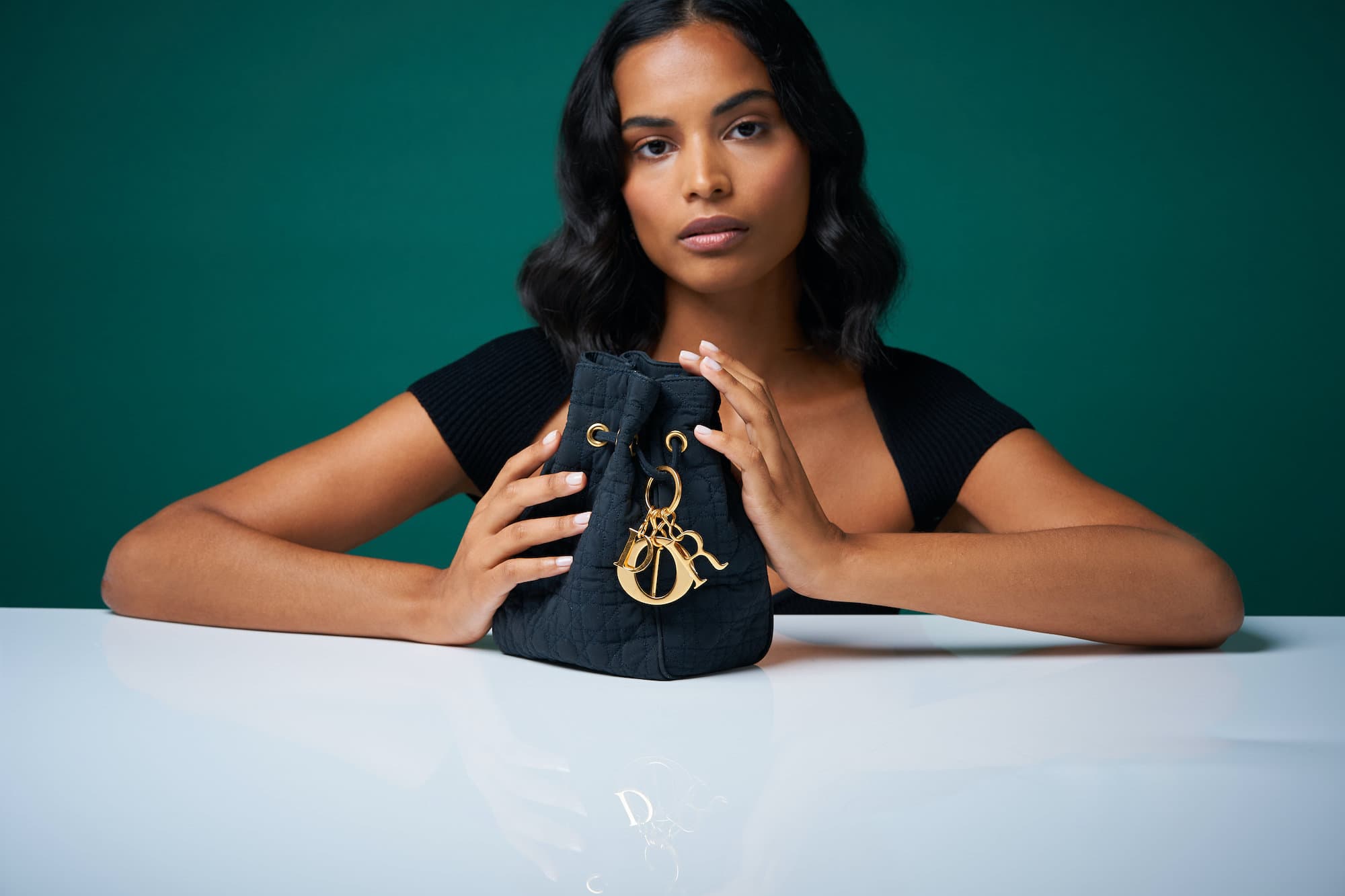
Dior has been creating iconic products since its founding in 1946. And while their highly coveted handbags have been on every fashion editor’s list for decades, Dior is also known for its clothing, shoes, jewelry, and accessories, but today we are going to focus on authenticating Dior’s most sought-after bags, such as the Lady Dior and the Saddle Bag.
A brief history of Dior
“Individuality will always be one of the conditions of true elegance.” — Christian Dior
Christian Dior, known for his designs with simplistic elegance, founded his legendary French fashion house in 1946 at 30 avenue Montaigne in Paris. Before launching his eponymous brand, Dior worked alongside Pierre Balmain at Lucien Lelong, where they designed dresses for the wives of military officers and French collaborators. Dior’s creations are more voluptuous and more figure-hugging than the boxy, conservative silhouettes of World War II styles... which was said to be due to a lack of fabric. He became an expert in creating feminine shapes and silhouettes for all women, regardless of size.
Authenticating Dior bags
The iconic models to know
Before getting into the technical details, it helps to know which model you are dealing with, as some checkpoints are specific to each line:
Lady Dior: a structured bag with rigid handles, D-I-O-R charms in the hardware, and the signature cannage stitching.
Saddle Bag: saddle-shaped, leather pull tab stamped “Christian Dior” on both sides, and clasp engraved with the CD monogram.
Book Tote: soft tote, usually in Oblique canvas, with flat handles.
Always compare the bag with the official photos of the exact model and season: proportions, logo placement, and finishes vary from one line to another, and a counterfeit rarely reproduces them perfectly across the entire range.
Dior leather tag
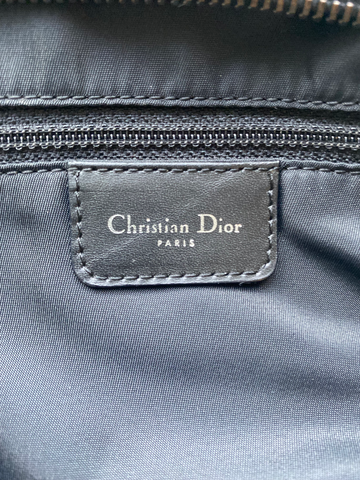
One of the first and most obvious ways to tell whether your bag is authentic is to check the tag and logo. Dior bags come with a leather tag featuring a heat stamp, which should be rectangular with rounded corners. Older bags (before the 1990s) have a single stitch at the top of the tag, while newer bags are stitched all around the edge.
On the front of the tag, you will find the heat-stamped logo, which should have between two and three lines. On the tag, you will find “Christian Dior” with “PARIS” and, on some bags, you will also find “MADE IN ITALY” or “MADE IN SPAIN” in capital letters, or sometimes on the back of the tag, above the date code. The stamp should be centered on the tag and the lettering should be in gold, silver, or colorless embossing.
Leather and materials
As with any luxury leather good, the material itself is one of the most reliable indicators. The leather of an authentic Dior bag should be supple, pleasant to the touch, and have the clean, natural scent of real leather — never the smell of plastic or glue, which is typical of the synthetic materials used in many counterfeits. Authentic leather ages well: it should never stick or flake, even on a pre-owned bag.
On canvas models, such as some Book Tote styles, the weave should be crisp and even, never loose or pixelated.
Lining
The lining deserves the same level of attention as the outside of the bag. It should be clean, securely attached, and of a color and quality consistent with the rest of the bag, with no stray wrinkles or peeling. A lower-quality, poorly fitted, or loose lining is a classic indicator of a counterfeit.
Dior stitching
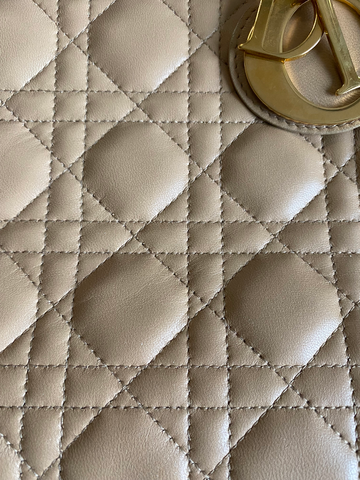
Another telltale sign is the stitching. If it is crooked, uneven, or irregular, you may have a fake Dior bag in your hands, as counterfeiters cannot copy Dior’s impeccable stitching. Among the elements to consider is the color of the stitching (the stitching on a genuine bag always matches the exact color of the leather and lining). Next, check the cannage stitch pattern, as it is quite difficult to reproduce. In addition, on counterfeits, the threads are deeply sunk into the leather, whereas on a real bag, the artisans would never damage the bag’s leather with deep stitching.
Dior handles
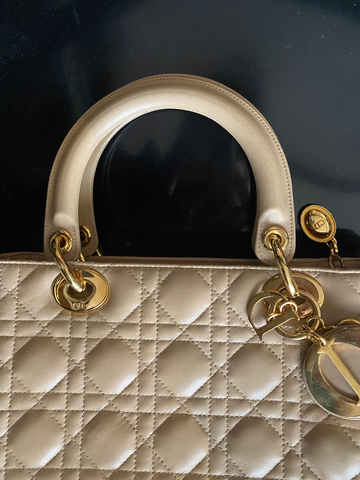
Handles are another place where a fake is easier to spot. If you are dealing with a bag like the Lady Dior, be sure to take note of the rigidity of the bag’s handles. They should be straight and rigid. Also check the handle stitching for the signs mentioned above. Counterfeits usually have wider and thicker handles.
The Dior zipper
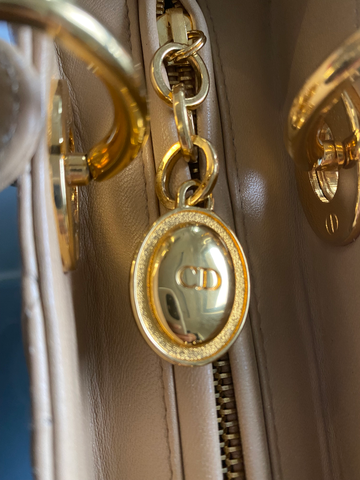
Zippers are another element to check, and the way they open and close should give you plenty of clues about authenticity. Dior also uses an oval, jewelry-like pull tab placed at the start of each zipper. The CD letters are engraved on these pull tabs. On other bags, such as the Saddle Bag, there is a leather pull tab with Christian Dior stamped on both sides.
Dior hardware
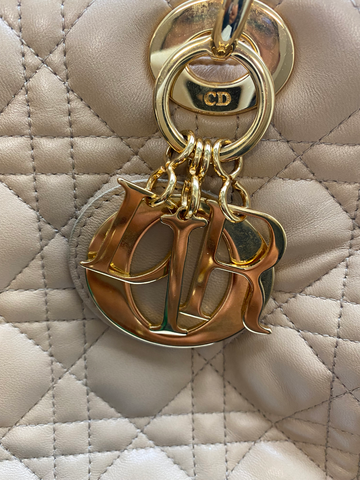
All the hardware on an authentic Dior bag is made from the highest-quality materials and should be solid and heavy. The hardware on genuine bags is never shiny, but rather matte, which gives it a vintage look and feel. Also check the engraved logo on the various bags. For items like the Saddle Bag, it is simply the CD, but on larger bags, Christian Dior is engraved on the hardware. Other hardware pieces are worth your attention: the charms, which consist of four letters forming the word Dior, and a larger oval leather tag than the “O”.
The Dior date code
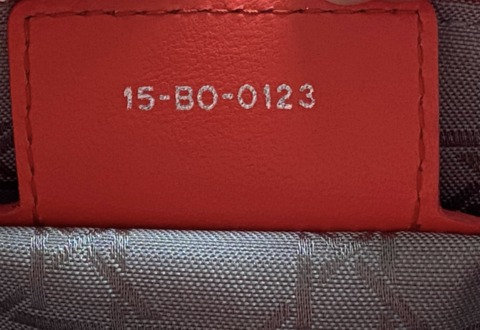
You will find the date code inside the bag by lifting the stitched tag near the zipper. Since Dior is also part of LVMH, the format is the same as that of a Louis Vuitton item, namely two numbers, two letters, and four numbers (00-XY-0000).
On older bags, the order may be different, separated by a space, and include two letters and four numbers.
On the date code, the last four numbers indicate the month and year the bag was made. The first and third numbers indicate the month of manufacture. The letters indicate the place where the item was made.
The earliest bags had no date code, only the mention “MADE IN ITALY” printed on the back of the tag.
What the code letters mean, as a guide for the most common factories:
Letters | Country / production site |
|---|---|
MA, BO | Italy |
MC | Spain |
Other letters exist depending on the period and the workshop; the key is to check that the letter + number combination is consistent and cleanly embossed, with no irregular spacing or approximate font — common flaws on counterfeits.
Evolution of the format over time, as a reference:
Period | Date code format |
|---|---|
Before the late 1990s | Often no code: only the mention “MADE IN ITALY/FRANCE” appears on the back of the tag |
Late 1990s – ~2007 | Two letters followed by four numbers (MMAA), sometimes separated by a space |
From around 2007 onward | Two numbers, two letters, four numbers (Louis Vuitton-style format, e.g. 16-BO-0133) |
Important point: the Dior date code is not a unique serial number assigned to each bag, but a batch code shared by all bags of the same model produced during the same manufacturing run. A valid, well-formed code is therefore a good sign, but it is never enough on its own to guarantee authenticity — it must be cross-checked against the other checkpoints (leather, lining, stitching, hardware).
Before buying: habits to adopt
An unusually low price is never, on its own, proof of a good deal — it is often the first warning sign.
A strong seller rating or good reviews do not guarantee the authenticity of the item being sold.
Always compare the bag with the official Dior photos of the exact model and season before relying on your first impression alone.
TBC Wholesale
Discover TBC Wholesale, the most reliable online platform with the largest wholesale selection of pre-owned luxury items. With TBC Wholesale, you get immediate access to the best-selling designer pieces for your resale business. On our wholesale platform, each item comes with a description, its condition, and a grading letter for major brands. Each item is checked and inspected by TBC, giving you and your customers peace of mind about the authenticity of every purchase. If you are a business, you can benefit from exclusive access to authentic pre-owned branded bags, jewelry, and accessories at wholesale prices. To learn more, click here.